



























Engineering High-Performance Air Brake Hoses: Safety & Reliability for Railway Applications
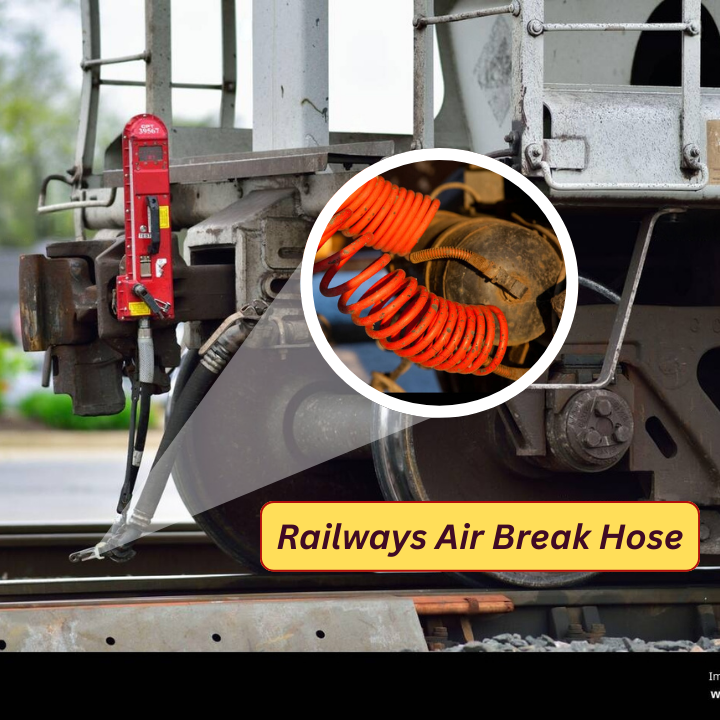
Railway air brake systems depend on a continuous supply of compressed air to control braking across a train. Flexible hose-coupling assemblies connect the brake pipe, and where applicable the feed pipe, between adjoining locomotives, passenger coaches and freight wagons. These railway air brake hoses must maintain pressure integrity while accommodating vehicle movement, coupling operations, vibration and outdoor exposure.
AB Elasto Products Pvt. Ltd. manufactures air brake hoses for railway applications as part of its railway rubber-product range. Product construction, dimensions, hose identification, coupling arrangement and acceptance testing should be matched to the applicable customer drawing and railway specification.
Why Air Brake Hose Reliability Matters
Compressed-air continuity is essential to dependable train braking. A damaged hose, insecure coupling or loss of pressure can affect brake-system performance and vehicle availability. Railway hose assemblies therefore require more than basic pressure resistance: they must remain flexible, correctly connected and resistant to the mechanical and environmental conditions encountered in service.
- Pressure integrity: The hose tube, reinforcement and end connections must contain the specified operating and test pressures.
- Controlled flexibility: The assembly must accommodate relative vehicle movement without kinking, excessive twisting or restricting airflow.
- Secure coupling: Coupling heads, sealing components and hose-end connections must maintain a dependable pneumatic connection.
- Environmental resistance: The outer cover must withstand specified exposure to weathering, ozone, sunlight, moisture, dust and incidental contamination.
- Dimensional consistency: Hose length, bore, coupling orientation and connection details must match the approved railway drawing.
Construction of a Railway Air Brake Hose
A railway air brake hose is an engineered assembly rather than a simple rubber tube. Its construction can include:
- Inner tube: Provides an airtight passage for compressed air and is selected for the specified temperature and service conditions.
- Textile reinforcement: One or more reinforcement layers help carry internal pressure and maintain dimensional stability.
- Outer cover: Protects the reinforcement from abrasion, ozone, weathering and normal railway-service exposure.
- End fittings: Hose nipples, clamps or crimped connections must provide secure attachment without damaging the hose structure.
- Coupling heads and seals: Application-specific components connect adjoining vehicles and support an airtight brake-pipe or feed-pipe connection.
The complete assembly must be considered during design and inspection. A suitable hose cannot compensate for incorrect coupling geometry, damaged seals, poor installation or components that do not match the approved drawing.
Material Selection for Railway Service
Compound selection influences flexibility, air retention, aging resistance and service life. Depending on the governing specification and operating environment, engineers may evaluate elastomers such as:
- EPDM: Commonly considered for weather, ozone, heat and water resistance where compatibility with the complete service environment is confirmed.
- NBR: May be considered where resistance to oil or fuel contamination is required, subject to low-temperature and weathering requirements.
- CR (neoprene): Can provide a balance of weathering, abrasion, flexibility and moderate oil resistance in suitable formulations.
The polymer name alone does not define performance. The approved compound, reinforcement, cover formulation and finished-hose construction must satisfy the required physical properties and acceptance tests. Temperature capability should therefore be stated according to the applicable product specification, not as a universal range for every air brake hose.
Important Design and Selection Data
Before manufacturing or ordering a railway air brake hose assembly, confirm:
- Brake-pipe or feed-pipe application
- Applicable drawing number, specification and latest revision
- Hose bore, overall length and coupling-head configuration
- Operating, proof-test and burst-pressure requirements
- Minimum bend radius and expected movement during service
- Temperature, weathering, ozone, abrasion and contamination exposure
- Marking, traceability, inspection and documentation requirements
Brake-pipe and feed-pipe assemblies should not be treated as interchangeable merely because they appear similar. Identification, dimensions and coupling details must follow the approved railway requirements.
Inspection and Performance Testing
The test plan should follow the customer-approved drawing and applicable railway specification. Depending on the required scope, inspection may include:
- Dimensional inspection: Verifies bore, hose length, coupling orientation and controlling dimensions.
- Proof-pressure and leakage testing: Checks pressure integrity and identifies leakage at the hose body or end connections.
- Burst-pressure testing: Confirms the required safety margin using the specified procedure and acceptance value.
- Adhesion and physical-property testing: Evaluates the bond between layers and relevant properties of the approved rubber compound.
- Ozone and accelerated-aging tests: Assess resistance to specified environmental and thermal exposure.
- Flexibility or bend testing: Confirms that the hose can meet the required movement or bend criteria without damage or flow restriction.
- Visual and traceability checks: Verify workmanship, identification markings and production records.
Statements such as RDSO or BIS compliance should refer to the exact specification, drawing, revision and approved scope applicable to the supplied product. ISO 9001:2015 relates to AB Elasto’s quality management system; it is not, by itself, an approval of an individual railway hose.
Installation and Maintenance Considerations
- Confirm that the hose type and coupling identification match the intended brake-pipe or feed-pipe location.
- Prevent twisting, sharp bending, dragging and contact with sharp edges during installation.
- Check coupling faces and sealing elements for damage, contamination or incorrect seating.
- Maintain adequate clearance from components that can abrade, heat or crush the hose.
- Inspect regularly for cracks, cuts, blistering, exposed reinforcement, leakage, loose fittings or permanent deformation.
- Replace the assembly according to the operator’s maintenance criteria; do not attempt unauthorized repairs to safety-critical hoses.
AB Elasto Railway Hose Capabilities
AB Elasto combines rubber-compound knowledge, hose reinforcement and assembly manufacturing for railway and OEM applications. Production requirements can be developed around the approved drawing, required dimensions, operating conditions, test plan and documentation needs.
For a technically accurate quotation, provide the hose application, drawing or specification reference, size, length, coupling details, quantity and inspection requirements. This helps ensure that the proposed hose assembly corresponds to the intended railway service.
Conclusion
Railway air brake hoses are safety-critical flexible connections that must combine pressure integrity, controlled flexibility, secure coupling and resistance to demanding service conditions. Reliable performance depends on correct material selection, reinforced construction, specification-based testing, proper installation and regular inspection.
Looking for railway air brake hose solutions? View the AB Elasto air brake hose or contact our technical team with your drawing, specification and quantity requirements.

With 30+ years of expertise, AB Elasto is an ISO-certified Industrial Rubber Products Manufacturer in India, delivering industrial rubber hoses, railway rubber components, rubber expansion joints, and OEM rubber solutions.
- ISO: 9001:2015 Certified
- Advanced Manufacturing
- OEM Rubber Solutions
What Our Clients Say

Agni Mazumder
Dear AB Elasto team,Thank you for your continuous support to us. Please continue supporting us.
Category Head: Electrical, Rubber, Hose & Pipes. Supply Chain Managment Tata Hitachi Construction Machinery Co. Pvt. Ltd.

Andrew Jayaprakash
I can rely on AB Elasto Products Pvt Ltd for quick development of moulded hoses with good quality at a reasonable price. All queries are answered promptly, in a timely manner that makes it easier to work with AB Elasto